
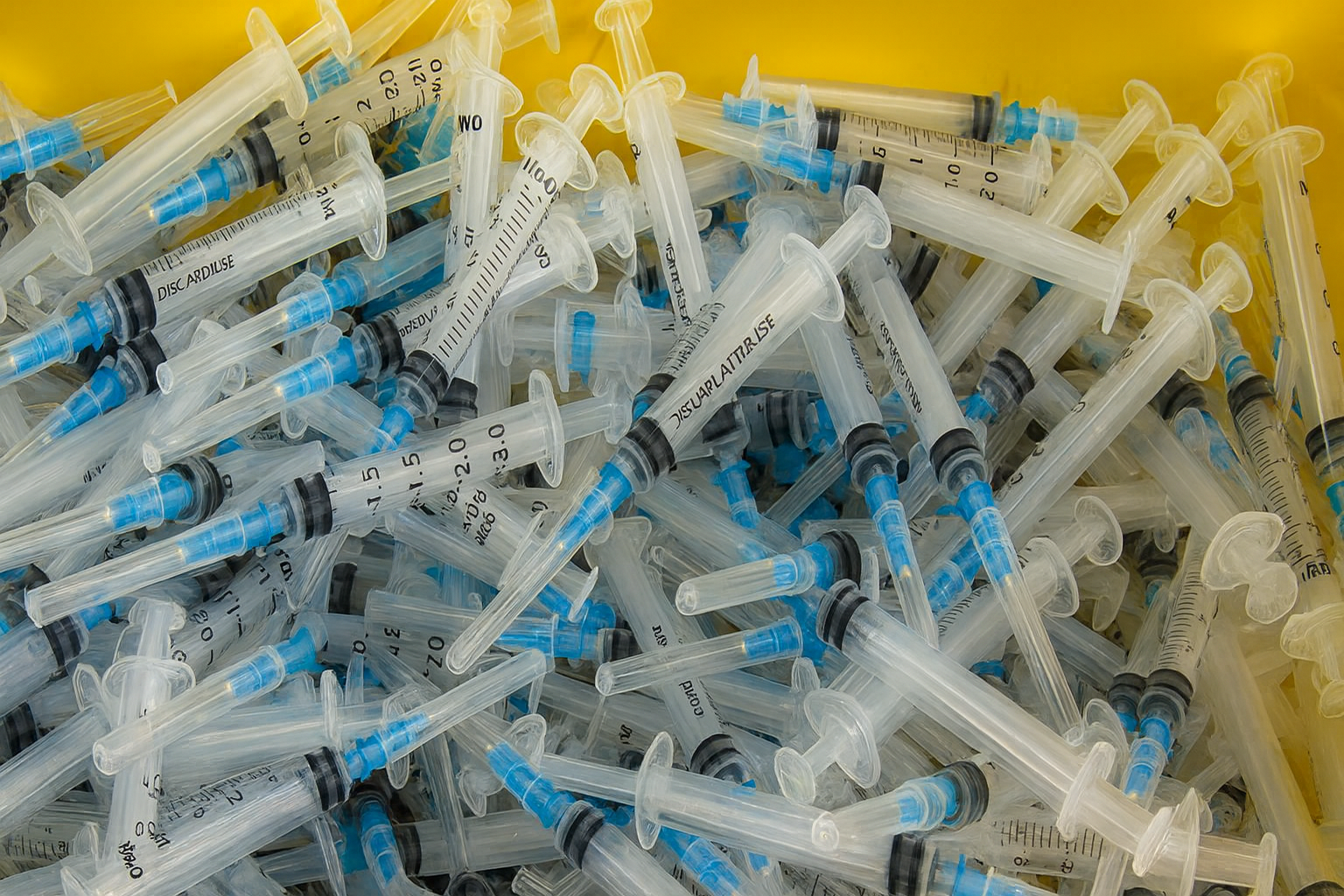
Disposable syringes, despite their vital role in medical safety, create serious environmental problems.
These syringes are made of non-degradable plastics, and improper disposal can lead to soil and water pollution, transmission of infectious diseases, and increased plastic waste.
Recycling them is difficult due to contamination with blood and drugs, mixed materials (plastic, metal, rubber), and high costs.
Solutions such as using safe collection containers (Sharps Container), investing in modern recycling technologies, raising awareness in healthcare centers, and developing biodegradable syringes can reduce these challenges.
Environmental Challenges of Disposable Syringes
- Widespread plastic pollution: Syringes are mainly made of polypropylene and polyethylene, which are non-degradable and remain in nature for hundreds of years
- Risk of disease transmission: Unsafe disposal of syringes can cause needle stick injuries and spread infectious diseases such as HIV and hepatitis.
- Soil and water pollution: Contaminated syringes entering municipal waste cause pollution of water and soil resources.
- Greenhouse gas emissions: Producing and disposing of medical plastics is energy-intensive and contributes to increased CO₂ emissions.
- Lack of recycling infrastructure: In many countries, including Iran, there are insufficient facilities for recycling medical waste, and much of it is incinerated or buried.
Challenges of Syringe Recycling
- Material contamination: Syringes after use are contaminated with blood or drugs and require specialized disinfection.
- Material composition: Different parts (plastic, needle metal, rubber washer) make separation and recycling difficult.
- High cost: Recycling medical waste requires advanced technology and high expenses.
- Lack of waste separation culture: Many healthcare centers and even patients dispose of syringes with regular waste.نبود فرهنگ تفکیک زباله: بسیاری از مراکز درمانی و حتی بیماران، سرنگها را همراه زبالههای عادی دفع میکنند.
Solutions to Reduce Environmental Impacts
- Use of sharps containers (Sharps Container) for safe collection of used syringes.
- Investment in modern recycling technologies such as steam sterilization and shredding plastics for reuse.
- Raising awareness in healthcare centers to separate medical waste from general waste.
- Development of biodegradable syringes using plant-based polymers.
- Strict government policies similar to the European Union that have reduced single-use plastic consumption.
Comparative Table: Challenges and Solutions
| Challenge | Consequence | Proposed Solution |
|---|---|---|
| Plastic Pollution | Long persistence in nature | Development of biodegradable syringes |
| Disease Transmission | Risk for healthcare staff and society | Use of sharps containers and specialized disinfection |
| Soil and Water Pollution | Threat to natural resources | Separate medical waste management from municipal waste |
| Syringe Material Composition | Recycling Difficulty | Advanced separation and recycling technologies |
| High Cost | Economic Limitations | Governmental and private investment in recycling |
Disposable syringes, despite their vital role in medical safety, create serious environmental challenges.Unsafe disposal can lead to widespread pollution and disease transmission. Solutions such as using sharps containers, developing recycling technologies, and producing biodegradable syringes can mitigate this crisis.
ًَّFAQ (Frequently Asked Questions)
- Why are disposable syringes problematic for the environment?
Because they are made of non-degradable plastics and remain in nature for hundreds of years. - Is it possible to recycle used syringes?
Yes, but it requires specialized disinfection and material separation technology, which is costly. - What is the biggest risk of unsafe syringe disposal?
Transmission of infectious diseases through accidental needle stick injuries. - How should used syringes be disposed of?
They should be placed in special sharps disposal containers. - Do biodegradable syringes exist?
Yes, some companies are producing them, but they are not yet widespread. - Why is syringe recycling difficult?
Because of contamination with blood and drugs and the mixture of different materials. - Does Iran have sufficient infrastructure for syringe recycling?
The infrastructure is limited, and most medical waste is incinerated or buried. - What solutions exist to reduce environmental impacts?
Use of sharps containers, awareness campaigns, investment in recycling technologies, and development of biodegradable syringes.
No comment