
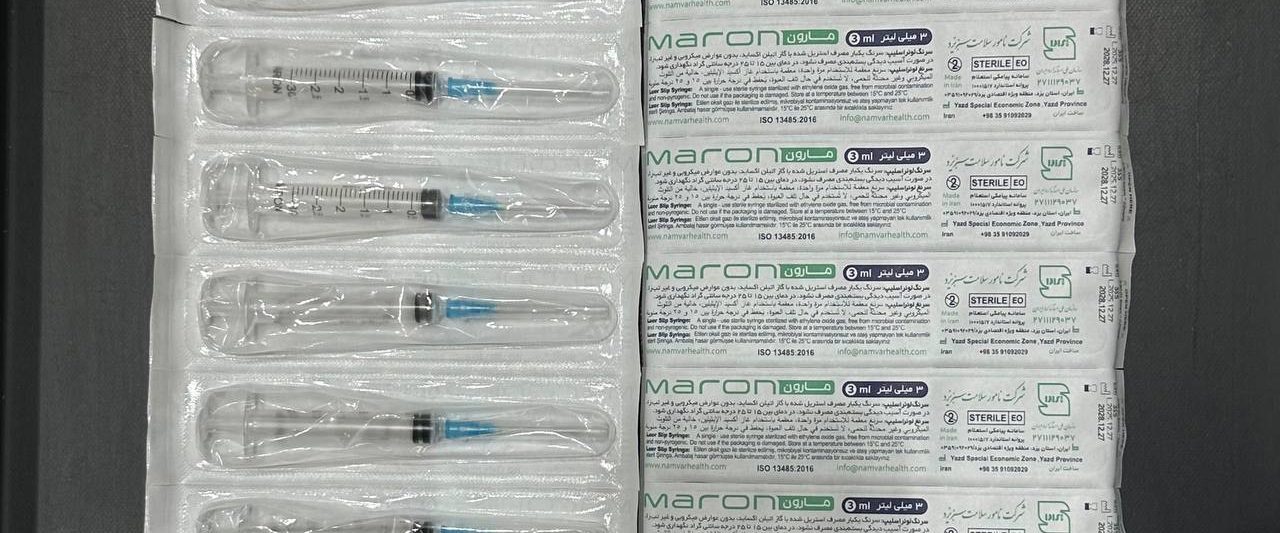
Safe use of medical syringes includes three main stages
- Before Injection: Check sterile packaging, expiration date, handwashing, and proper syringe size
- During Injection: Use a new needle, correct injection angle, air bubble control, and smooth plunger movement
- After Injection: Cover injection site, dispose syringe in sharps box, avoid bending needle, record injection
- Waste management and healthcare staff safety: using Sharps Containers, full staff training, prevention of needle‑stick injuries, and adherence to biohazard waste protocols.
Before Injection
- Expiration date check: Always verify the expiration date printed on the syringe packaging.
- Ensuring sterile packaging: The packaging must not be opened or damaged.
- Handwashing and wearing gloves: This helps prevent contamination.
- Choosing the appropriate syringe size: The size must match the type of medication and injection site.
- Medication preparation: The medication must be prepared under sterile conditions and protected from environmental contamination.
During Injection
- No touching the needle: The needle must not come into contact with the hand or any non‑sterile surface.
- Correct injection angle: Depending on the medication, the injection may be subcutaneous (Subcutaneous), intramuscular (Intramuscular), or intravenous (Intravenous).
- Smooth plunger movement: The injection must be performed with even pressure so the patient feels less pain.
- No reuse: Each syringe must be used only once.
- Air bubble control: Air bubbles must be removed from the syringe before injection to reduce the risk of embolism.
After Injection:
- Covering the injection site: With sterile cotton or bandage to prevent bleeding and infection.
- Not bending or breaking the needle: This increases the risk of injury and contamination.
- Immediate syringe disposal: The syringe must be placed immediately after use into the designated container (Sharps Container).
- Injection documentation: The medication type, dose, and injection time must be recorded in the patient’s file.
مدیریت پسماند پزشکی
- Use of standard safety box: Puncture‑resistant containers for collecting syringes.
- Replacing the safety box at the right time: It must be replaced when three‑quarters full.
- No disposal in household waste: Syringes must be disposed of through the medical waste management system.
- Safe waste transport: Safety boxes must be transported to medical waste disposal centers.
نکات ایمنی برای کادر درمان
- Full staff training: Nurses and doctors must receive proper training on injection and safe syringe disposal.
- Prevention of needle‑stick injury: Using safe techniques to prevent accidental needle penetration.
- Use of protective equipment: Gloves, mask, and gown are necessary in certain situations.
- Incident reporting: In case of needle‑related injury, it must be reported immediately and medical action taken.
Summary Table of Safety Points
| step | Safety Guidelines |
|---|---|
| Before Injection | Expiration check, sterile packaging, handwashing, size selection |
| During Injection | Do not touch the needle, Correct injection angle, Remove air bubbles, Uniform injection |
| After Injection | Cover injection site, Do not bend or break the needle, Immediate disposal in sharps container |
| Waste Management | Use standard sharps container, Replace sharps box when 75% full, Safe transport of medical waste |
| Healthcare Staff | Full staff training, Prevention of needle stick injuries, Use protective equipment |
Following these safety guidelines not only ensures patient safety but also prevents serious risks to healthcare staff and the environment.
Frequently Asked Questions:
- What are disposable syringes made of? → Medical plastic such as polypropylene.
- Why are disposable syringes recommended? → To prevent the transmission of infectious diseases.
- Which syringe size is most commonly used? → 5 ml and 10 ml.
- What is the difference between Luer Slip and Luer Lock? → Simple push connection vs safer twist‑lock connection.
- Is an insulin syringe different from a regular syringe? → Yes, it has a finer design and a shorter needle.
- Can a syringe be reused? → No, it is single‑use only.
- How should used syringes be disposed of? → In designated Sharps Containers.
- Are Iranian syringes of acceptable quality? → Yes, they are produced under the supervision of the Food and Drug Administration.
No comment